
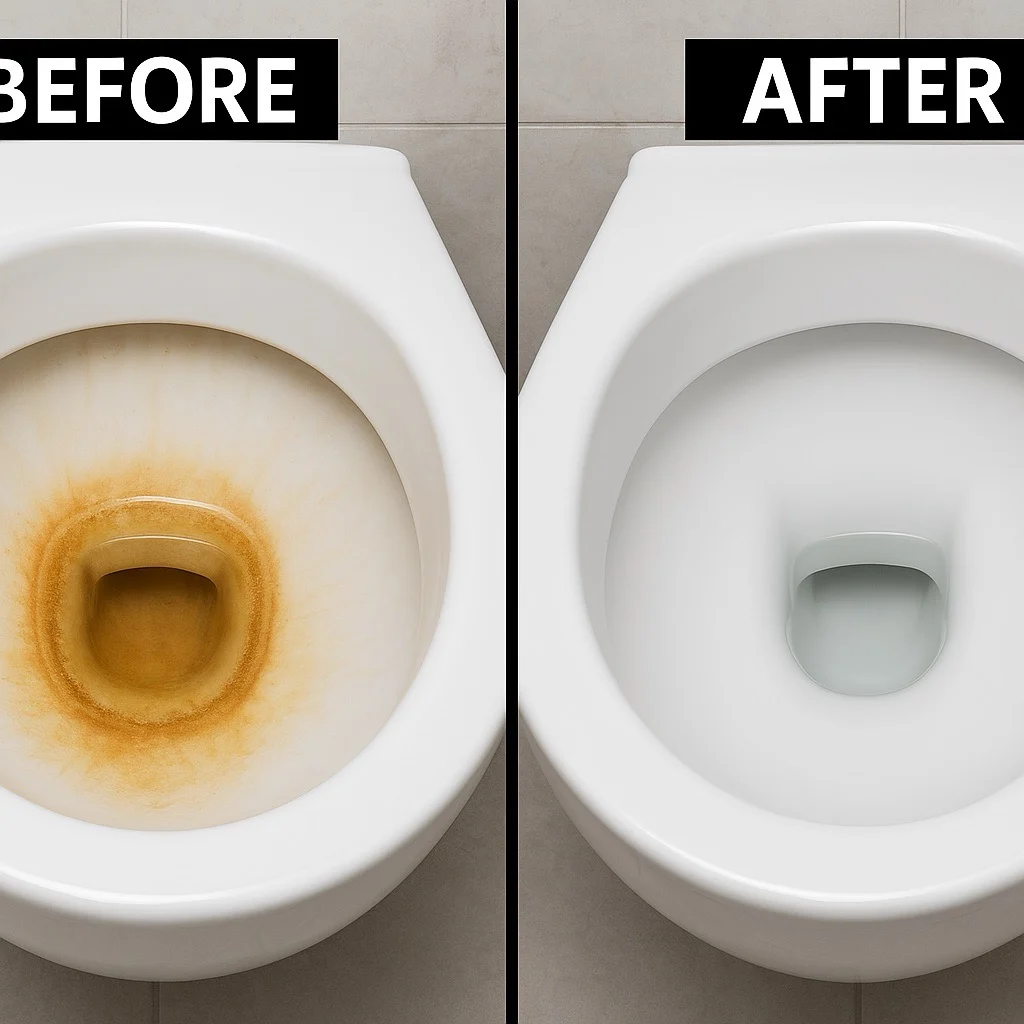
If you have hard water or are on tank water, limescale can build up at the bottom of your toilet – making it look dirty all the time.
No amount of bleach or scrubbing seems to get this awful looking brown build-up off the bottom of the loo.
Bleach may look like it is working, but it’s only bleaching the actual scale – and it will go back to looking manky fairly quickly.
But there is a solution!
Here’s how to safely get your toilet sparkling clean and white again.

What actually is limescale?
Limescale is a hard mineral deposit that ‘grabs’ onto any imperfections on the bottom of the toilet bowl. The more it builds up, the harder it becomes to remove. The only thing that will break it down is an acid-based cleaner.
Step 1: Empty the water from the bowl
Turn off the tap connected to your toilet. Scoop out the water with a ladle or small container, then mop up the rest with old rags or paper towels. Wear gloves for this step. Allow it to dry for about an hour.
Step 2: Fill the toilet bowl with an acid cleaner
For stubborn cases, use a commercial limescale remover such as CLR Clear. Pour in enough to cover the limescale and let it sit overnight (at least 8 hours). Every so often, give it a scrub with a toilet brush to help loosen the deposits.
If the problem isn’t too bad, plain white vinegar can also work, though it may take longer.
Step 3: Gently scrub with safe tools
If there are still stubborn bits, don’t reach for steel wool – it can scratch and permanently mark your toilet.
Instead, try:
- A pumice stone made for toilets (available at supermarkets and hardware stores)
- A stiff nylon brush
- Plastic scrubbing pads (non-scratch, the type made for Teflon pans)
Keep the area wet while scrubbing to avoid scratches.
Step 4: Flush and repeat if needed
After scrubbing, flush the toilet a few times. Particularly bad limescale may need more than one round of treatment.
Step 5: Prevent future limescale
Once your toilet is clean, keep it that way with a weekly vinegar flush. Just pour in four cups of white vinegar, leave overnight, and flush in the morning. This also helps neutralise odours and is safe for septic tanks.
Final tip
Toilets are an investment, and using harsh abrasives like steel wool can do more harm than good. Stick to gentle acids and safe scrubbers, and your loo will stay fresh and white without risk of damage.
Got another trick that’s worked for you? Share it in the comments – our community loves swapping cleaning hacks!
For more bathroom cleaning tips, check out our guide on Getting Rid of Mould from Your Bathroom.


Have your say!